
The Story Behind Soma Alchemy
Before there was an Institute, there was a little girl who couldn't stop asking why.
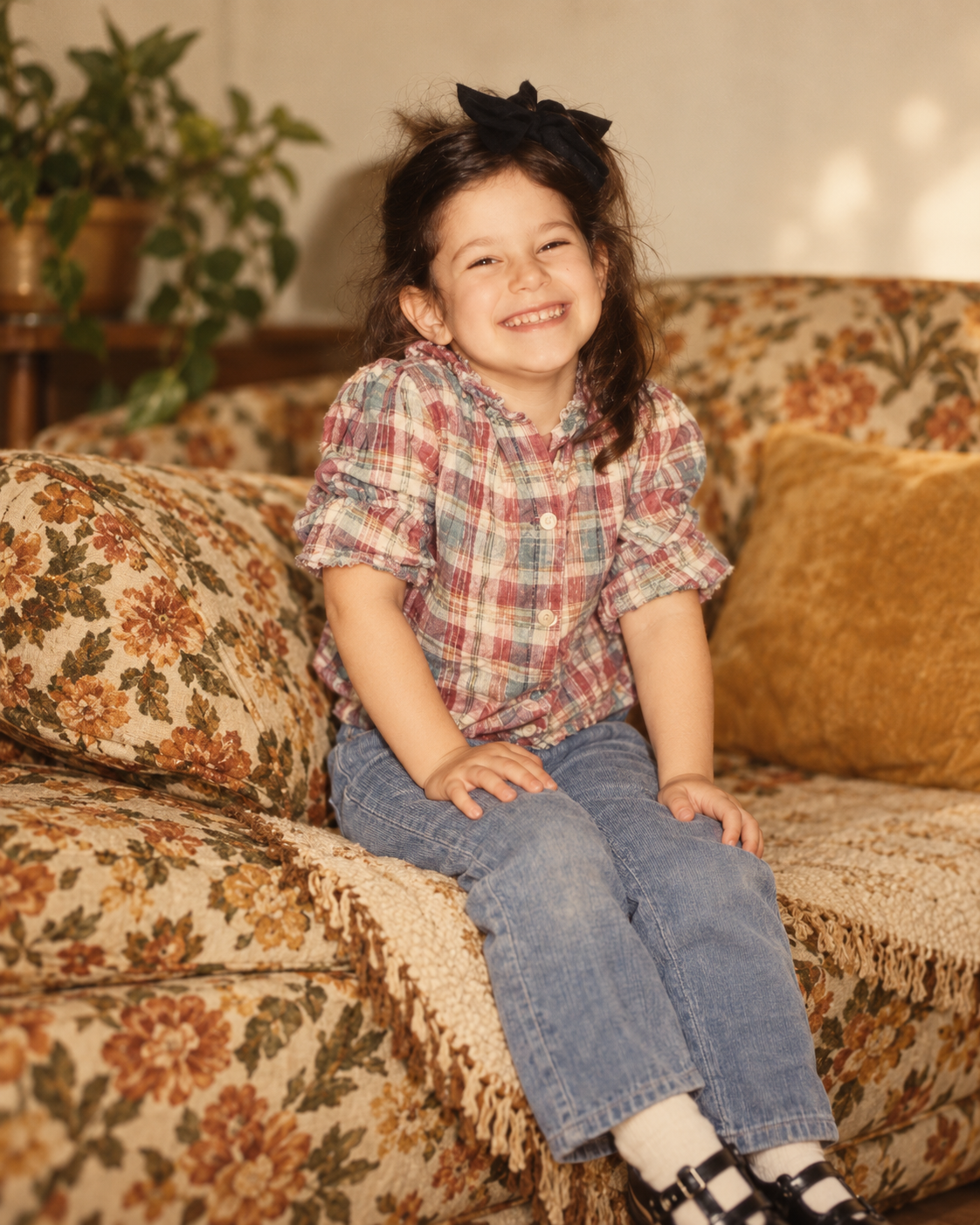
This Institute Didn't Begin With an Idea.
It Began With a Question.
Before There Was Soma Alchemy...
There was a little girl who couldn't stop asking why.
Why do people suffer?
Why do some people choose kindness while others cause unimaginable harm?
Why do children become ill?
Why do babies die?
Why do storms destroy homes and lives?
Why was I born into this family?
Why was I here?
Long before I understood psychology, neuroscience, trauma, or somatic healing, I was searching for something much deeper.
I wasn't looking for a career.
I was searching for understanding.
Looking back now, I realize those questions became the foundation of everything that followed.
They shaped the way I viewed the world, the work I chose to pursue, the people I was drawn to serve, and ultimately, the creation of The Soma Alchemy Institute.
_ _ _ _ _ _ _ _ _ _
Where the Questions Began
I was born in Cleveland, Ohio, into a large Italian family rooted in Sicilian and Calabrese traditions. We lived in poverty, but what I remember most wasn't the lack of resources—it was the questions that seemed to live quietly inside me.
Even as a young child, those questions were rarely separate from action.
At five years old, I joined Girl Scouts as a Daisy, beginning what would become years of deep involvement in service and community life. I was an overachiever even then, earning more badges than I had places to put them. But what stayed with me most was not the recognition. It was the opportunity to participate, contribute, and be useful.
I felt especially connected to older adults. In Cleveland, I spent countless hours with the elderly woman who lived across the street from our family. As I grew older, I volunteered in nursing homes and looked for ways to help wherever I could.
I was drawn toward people who were vulnerable, overlooked, lonely, or suffering.
Somewhere inside me was an early conviction that suffering should not simply be witnessed when something could be done to reduce it.
At eight years old, I attended Our Lady of Good Counsel Catholic School and made my First Communion. Although I couldn't explain it then, I remember feeling as though something shifted within me around that time. It was the beginning of an awareness that would stay with me for the rest of my life.
One of my clearest childhood memories is standing in the backyard of our home, looking toward the cemetery beyond our chain-link fence. I found myself wondering about life, death, purpose, suffering, and what existed beyond what we could see.
As I grew older, those questions increasingly shaped the way I responded to the world around me.
I started advocacy groups. I spoke up for other students. I defended children who were being bullied or mistreated, even when the person causing harm was an adult, staff member, or administrator.
I did not yet have the language of advocacy, systems, power, trauma, or social justice.
I simply knew when something was wrong, and I believed someone should do something about it.
Often, that someone became me.
When my family later moved to Parma Heights, life changed. Both of my parents began working, and as the oldest daughter still at home, I naturally stepped into the role of caregiver for my siblings. I was ten years old.
Without realizing it, I was becoming a student of human behavior.
I watched people closely.
I noticed patterns.
I paid attention to what was said and what was left unsaid.
I noticed the slightest change in someone's tone of voice.
I was deeply sensitive to what could not always be seen or explained.
I knew what lying looked like, felt like, sounded like, tasted like.
I instinctively looked beyond the roles, masks, and behaviors people presented to the world, searching for the whole person underneath.
I noticed the difference between what people presented on the surface and what seemed to be happening underneath.
Looking back, I can see that I was learning to trust an inner authority—an ability to observe what others overlooked, question what I was told to accept, and act when something felt fundamentally wrong.
Long before I became a social worker, transpersonal psychotherapist, advocate, educator, or founder, the orientation was already there:
Look beneath the surface.
Listen to what others are not hearing.
Protect those whose voices are being ignored.
And when suffering can be reduced, do something.
When the Observer Became the One in Need of Help
When my family moved from Cleveland to Parma Heights, my parents believed they were giving their five children an opportunity for a better life.
In many ways, the move changed the direction of mine.
Both of my parents worked to support our family, and within the family and cultural expectations I grew up with, caregiving responsibilities often fell to the girls and women.
Even when they were still children themselves.
I stepped into the role that was expected of me.
I gave up many of the activities and parts of childhood I had once loved and became increasingly responsible for caring for my siblings and managing a home that was becoming more chaotic than any child should have been expected to control.
As my siblings grew older, the problems became more serious.
Defiance. Alcohol. Drugs. Parties. Conflict. Police. Courts. Children and family services.
Our home became known in the neighborhood for its chaos.
And eventually, I could no longer hold everything together.
The child who had spent years trying to protect everyone else began to disappear.
I started using drugs and alcohol. I became increasingly self-destructive. I experienced sexual violence at an age when I was still trying to understand relationships, safety, and my own worth.
Those experiences profoundly shaped the beliefs I carried about men, intimacy, love, and what it meant to survive.
Yet perhaps one of the most painful parts of that period was how invisible I became.
My family was surrounded by systems designed to identify children in need.
Schools.
Courts.
Law enforcement.
Children and family services.
Adults moved in and out of our lives.
My siblings received attention, intervention, and services.
I was suicidal by thirteen years old, and somehow, I remained unseen.
I had already made my first suicide attempt.
I was deeply depressed, isolated, and desperately searching for evidence that someone recognized how much I was struggling.
But I did not receive counseling.
When I was finally asked what I did not like about myself, the answer was interpreted as a problem that could be corrected with braces.
I received orthodontic treatment.
What I needed was someone to ask a different question.
What happened to you?
My life continued moving forward at a speed I was not prepared for.
I entered a relationship with an older man and became pregnant at fourteen.
By sixteen, I was pregnant with my second child.
By seventeen, I was still in high school, raising two children largely on my own and discovering that the person I believed I was building a life with had been living another life entirely.
Before I had finished being a child, I had become responsible for raising children of my own.
And still, somehow, I kept going.
Survival Began to Become Purpose
At seventeen years old, I was still in high school, raising two children, working, and trying to imagine a future I did not yet know how to build.
During my first pregnancy, health complications forced me to leave the cosmetology vocational program I had originally chosen. I eventually transferred into my high school's vocational child care program.
At first, the decision was practical.
My high school offered a program for teenage parents, and students in the vocational child care program rotated through the infant room where our babies received care. Being there gave me opportunities to spend time with my children while continuing my education.
But something unexpected happened.
I began to study.
I spent every free moment I could in the infant room—learning about child development, caring for other young mothers' babies, observing families, and trying to understand how children grow and what they need from the adults responsible for them.
I began studying family systems and creating curriculum designed to help children and parents learn and grow.
And once again, I began noticing what other people seemed willing to accept as normal.
I saw children struggling in environments that did not understand their needs.
I saw young mothers trying to raise children while still growing up themselves.
I saw families repeating patterns without understanding where those patterns came from.
I saw suffering hidden inside behaviors that adults often labeled as defiance, failure, or dysfunction.
The more I learned, the more questions I had.
By then, I was also working as many hours as I could at a grocery store, where I had been employed since I was fifteen after having my first child. I worked to help support my children while my parents and siblings helped care for them so I could continue working and attending school.
I was exhausted.
I was confused about my future.
And I understood that my decisions were no longer mine alone to make.
Every choice had to include two questions:
What do I need to survive?
What do my children need from me?
Somehow, amid all of that, I graduated with honors and on time with my high school class in 1999.
I enrolled at a local community college without a clear career plan.
I did not yet know what profession I would enter.
But I knew something with increasing certainty:
I needed to help people.
At that point in my life, my focus was children.
I had experienced firsthand how easily a child's suffering could be overlooked, misunderstood, normalized, or addressed only after it had become a crisis.
Now, through my education and work with children and families, I was beginning to see those same patterns from another perspective.
It made me angry.
It made me curious.
And it made me unwilling to accept that this was simply the way the world had to be.
I was beginning to understand that my life could become more than a series of experiences I survived.
Those experiences could become information.
The information could become understanding.
And understanding could become action.
I did not yet know what form that action would take.
But for the first time, the questions that had followed me since childhood were beginning to point me toward a direction.
In 1999, I began attending Cuyahoga Community College with the intention of studying child psychology. I started completing the prerequisites for an Associate of Arts degree, believing that working with children might become the path through which I could begin addressing some of the suffering I had spent my life observing.
After turning eighteen and graduating from high school, my children, their father, and I moved into our first apartment together.
From the outside, it may have looked like progress.
I had graduated with honors.
I was attending college full time.
I was working full time.
I was raising two children.
I was building a home with the person I believed would be my life-long partner.
But behind the appearance of moving forward, I was becoming overwhelmed by responsibilities no one had prepared me to carry.
I was eighteen years old, trying to learn how to manage a household, support a family, succeed in college, raise two children, and maintain a relationship—all while still trying to understand who I was.
It was only after we began living together that I started recognizing another pattern.
He worked.
He went to the bar.
He drank.
He went to strip clubs.
He came home expecting dinner, sex, and a home that functioned around his needs.
When those expectations were not met, conflict followed.
I learned to anticipate moods.
I learned to manage the environment.
I learned to keep things functioning.
I learned to carry more.
I learned to shrink.
I learned to sacrifice.
I learned how to keep the peace while chaos and confusion boiled inside of me.
Once again, I found myself responsible for holding together a system that was asking more of me than it was giving back.
And the questions returned.
Why was this happening again?
Why did I continue to become responsible for everyone else's needs while my own remained invisible?
Why could someone be working, studying, parenting, achieving, and surviving—and still be unseen?
I began wondering whether the life I was living was somehow a punishment for the choices I had made when I was younger.
Maybe this was what I deserved.
Maybe surviving meant learning how to tolerate more.
Maybe being needed was the closest I would ever come to being loved.
I did not yet understand trauma repetition.
I did not understand attachment.
I did not understand coercive control, relational trauma, or the ways early experiences can shape what we learn to recognize as normal.
I only knew that I was doing everything I had been taught a responsible person was supposed to do.
And I was still disappearing.
Discovering the World
Beyond What I Had Been Taught
College exposed me to something I had desperately needed but did not yet know I was missing:
Other ways of living.
I began making friends and spending time with people whose families, relationships, beliefs, and ways of communicating were different from those I had grown up knowing.
For the first time, I had something to compare my experiences against.
And that comparison was disorienting.
I had grown up in poverty, and I was determined to build a different life for my children. But as my world expanded, I began realizing that poverty was not the only environment I had been trying to escape.
I had inherited beliefs about relationships, gender, family, religion, sacrifice, and what it meant to be a “good woman.”
I had learned that assertiveness was aggression.
That loudness, conflict, and volatility were simply part of our culture.
That marriage should be preserved even when a relationship was harmful.
That staying together for the children was more important than the safety and well-being of the people inside the home.
And perhaps most deeply, I had learned through generations of women around me that a woman's value was measured by how much she was willing to sacrifice.
Men came first.
Children came first.
Everyone came first.
You came last.
Even when you were exhausted.
Even when you were suffering.
Even when you were unsafe.
Even when your body was telling you that you could not continue.
Your needs were negotiable.
Your responsibilities were not.
For most of my life, I had accepted these beliefs as reality because I had never been given another frame of reference.
College began changing that.
I took classes beyond those required for my degree because I was hungry to understand more. I studied psychology and human behavior, but I also became increasingly interested in religion, culture, philosophy, and the systems of belief people use to make sense of existence.
Religious studies became especially important to me.
I had been raised Catholic and taught to understand religion through a particular framework of truth, morality, sin, and salvation.
But when I began studying religions comparatively, I encountered something that fundamentally changed the way I thought.
Traditions that had been presented as completely separate—and often incompatible—shared recurring themes.
Human beings across cultures had been asking many of the same questions I had been asking since childhood.
Why are we here?
Why do we suffer?
What happens when we die?
How should we treat one another?
What is sacred?
How do we live a meaningful life?
The language was different.
The rituals were different.
The stories were different.
But underneath them, I began seeing patterns.
And once again, I found myself asking why.
Why were people taught to fear, reject, or condemn one another when their traditions often emerged from similar human questions?
Why did institutions built around meaning, morality, and community sometimes contribute to division, shame, and suffering?
Why was curiosity treated as dangerous when asking questions was the very thing helping me understand the world more clearly?
The more I learned, the more I realized how much of what I had accepted as unquestionable truth was actually one interpretation of a much larger human story.
That realization was both liberating and destabilizing.
I was beginning to understand the difference between inheriting a worldview and consciously examining one.
For the first time, I was learning that I could question what I had been taught.
I could examine the patterns I had inherited.
I could decide what I wanted to carry forward.
And I could begin challenging what was causing harm.
Looking back, I think this was one of the first times I began moving out of the shock state I had lived inside for much of my life.
I was beginning to see the reality around me more clearly.
And that clarity brought another realization.
Many of the things that had happened in my life were not simply the result of individual choices or personal failures.
People are shaped by systems.
Families are systems.
Cultures are systems.
Religions are systems.
Communities are systems.
Schools are systems.
And systems can nurture human beings.
They can also normalize suffering so thoroughly that the people living inside them no longer recognize it as suffering.
I was beginning to recognize something that would eventually become central to my work:
You cannot fully understand a person without understanding the systems that helped shape them.
Learning I Was Worth Caring For
In 2002, I earned my Associate of Arts degree from Cuyahoga Community College. For financial reasons, I stayed another year to complete the prerequisites I needed to transfer into the Bachelor of Social Work program at Cleveland State University.
During my years at Tri-C, I met a woman who was beginning a new career in her fifties after raising her children.
I do not think she ever knew how profoundly one conversation would affect the direction of my life.
She spoke openly about regret.
She told me not to wait until my children were grown to begin living my own life. Not to sacrifice myself for the sake of keeping the peace. That I deserved love, joy, and experiences that belonged to me, too.
Her words challenged something I had been taught for most of my life.
What if caring for myself was not selfish?
What if I was also someone worth caring for?
That question opened another world.
I began exploring approaches to health and healing that I had barely known existed.
Psychotherapy, Massage therapy. Aromatherapy. Herbal medicine. Sound. Relaxation practices. The relationship between mind, body, and what I understood as soul.
Growing up in poverty, spending money on these kinds of experiences would have seemed unnecessary or irresponsible. Resources were used for survival. Self-care was a luxury. If I dare spend a dime on myself and not my children I would be shamed for doing so!
But I was beginning to recognize that surviving and living were not the same thing.
I began taking classes, experimenting, reading, and learning.
Once again, one discovery led to another question.
I wanted to understand why the body responded to touch, sound, plants, breath, environment, relationship, and meaning.
I wanted to understand why human beings had developed healing practices across cultures and throughout history.
And I wanted to know what conventional systems of health and mental health might be overlooking when they separated the mind from the body, the person from their environment, or healing from the experience of being human.
At the same time, my professional direction was becoming clearer.
I transferred to Cleveland State University with two semesters remaining and earned my Bachelor of Social Work degree in 2004.
I became an active honors social work student and created Social Work in Action, an advocacy group designed to address issues on campus and create a place where people could feel safe, seen, heard, and validated.
The pattern was familiar.
Wherever I went, I found myself looking for the people who were being overlooked.
I wanted them to know they were not alone.
But my advocacy did not remain on campus.
During that same period, my children and I were living in an apartment building where the conditions had become dangerous.
Each time it rained, sewage backed up through our kitchen sink and flooded the kitchen and dining room.
Every time, I cleaned.
Sanitized.
Tried to protect my children.
Tried to protect my own health as my asthma and allergies continued to worsen.
And waited for the person responsible for the property to do something.
Eventually, I realized that waiting was not going to change anything.
So I began learning about tenant and landlord law.
I organized meetings in my apartment where residents could come together, learn about their rights, document what was happening, and understand what options were available to us.
When the conditions continued, I contacted the health department and pushed for intervention.
Once again, I found myself stepping into responsibility when the systems and people responsible for protecting others failed to do so.
At the time, I saw this simply as doing what needed to be done.
If people were being harmed and I knew how to help, how could I do nothing?
I did not yet understand the cost of believing that every problem I could see was also mine to carry.
My desire to reduce suffering was becoming my life's work.
But I had not yet learned the difference between serving others and sacrificing myself.
After completing my bachelor's degree, I was admitted to the one-year Advanced Standing Master of Social Work program and began graduate study in the summer of 2005.
From the outside, I was building the life I had fought for.
I was earning degrees.
Raising children.
Working.
Advocating.
Studying healing.
Preparing for a career devoted to helping others.
But inside my own home, I was still living in survival.
Knowing Better
Didn't Mean I Was Free
While I was completing my bachelor's degree and preparing to enter graduate school, my life was divided between two realities.
In one, I was becoming a social worker.
I was studying human behavior, families, systems, oppression, trauma, advocacy, and the conditions that shape people's lives.
In the other, I was returning home to an abusive relationship marked by alcohol, betrayal, volatility, and fear.
I worked full time.
Attended school full time.
Completed internships.
Paid bills.
Raised my children.
Cooked.
Cleaned.
Studied.
Tried to keep everyone safe.
And continued placing myself last.
I could advocate for other people.
I could recognize injustice.
I could understand systems.
I could learn the language of abuse and trauma.
And I still did not know how to free myself from the life I was living.
I survived by doing what I had always done.
More.
I worked harder.
Slept less.
Stayed awake for days completing assignments, cleaning the house, preparing meals, caring for my children, and trying to prevent everything around me from falling apart.
By the time I was preparing for final exams and graduation from Cleveland State University, I was profoundly burned out.
The overachiever who had spent years trying to excel had one goal left:
Survive.
Around that same time, my body began sending signals that something was seriously wrong.
I started bleeding heavily from my rectum.
I did not stop.
I did not go to the doctor.
I wore a maxi-pad and kept going.
Finals still had to be completed.
Graduation was approaching.
My children still needed me.
I still had to work.
The house still had to function.
There was always something or someone who seemed to need my attention more than I did.
So I did what I had learned to do.
I put myself last.
After graduation, I mentioned to my mother that I was still bleeding.
Because of our family health history, she immediately recognized the seriousness of what I had been minimizing and insisted that I see a gastroenterologist.
I underwent testing and was diagnosed with Crohn's disease.
At the time, I saw the diagnosis primarily as another problem to manage.
Another appointment.
Another responsibility.
Another thing I would have to carry while continuing to work, raise my children, pursue my education, and hold together a life that was already becoming impossible to sustain.
I had spent years studying people, systems, suffering, and the ways human beings survive.
But I had not yet learned to recognize what chronic survival was costing my own body.
Even when my body was bleeding, I believed I had to keep going.
And shortly after that, another event would force me to confront just how dangerous the life I was living had become.
The night of Thanksgiving, my partner came home intoxicated.
I was asleep when he entered the bedroom accusing me of cheating and screaming.
By then, I had learned to keep the telephone nearby.
When violence or threats began, I would dial my mother's number so she could hear what was happening and call the police.
Sometimes she would arrive before they did.
That night, my six-year-old daughter woke to the screaming.
She sat terrified in the corner of the room as her father held a butcher knife to my throat.
My back was against the wall.
My mother was listening through the telephone.
And I focused on one thing:
Staying calm enough to keep us alive.
I asked him to put the knife down.
I asked him to look at our daughter.
I asked him to see how frightened she was.
Somehow, I was able to de-escalate the situation.
When I could move, I went to my daughter and held her.
My mother arrived.
Then the police.
An officer sat down with me that night.
He told me he could not decide what I should do.
But he had been to my home before.
He had responded to the domestic violence.
He had watched me stay.
This time, he told me, was different.
And something inside me knew he was right.
For years, I had believed leaving would destroy my family.
That night, I understood that staying might.
Enough was enough.
I appeared at the court hearing with a victim advocate.
I obtained a protective order for my children and myself.
I gave notice that I would be leaving our apartment.
And my children and I moved back into my parents' home.
I had spent much of my life trying to protect other people.
I had spoken for those who were being ignored.
Defended those who were being mistreated.
Recognized suffering in people others overlooked.
Yet when it came to my own suffering, I had learned to endure.
To minimize.
To adapt.
To keep functioning.
To survive.
Knowing about abuse had not made me immune to it.
Studying human behavior had not freed me from the patterns that shaped my own life.
Understanding systems had not yet taught me how deeply those systems could live inside a person—in the body, in relationships, in beliefs about responsibility, and in what we learn to tolerate.
Leaving did not mean I had healed.
It did not mean I understood everything that had happened to me.
And it did not mean the survival patterns I had spent a lifetime developing suddenly disappeared.
But I had made a decision.
For perhaps the first time in my life, I included myself among the people worth protecting.
Building a New Life
With an Old Blueprint
I was twelve years old when I met the person I believed would become my forever.
I had grown up believing life followed a familiar story.
You found someone.
You fell in love.
You built a family.
You stayed together.
And eventually, after enough struggle, sacrifice, and perseverance, you reached the happy ending.
No one had prepared me for the possibility that the stories we inherit about love, family, and relationships may have very little to do with the realities we eventually live.
By the time I left the father of my children, I had spent nearly half my life connected to him.
I had never experienced adulthood without being a mother.
I had never experienced adulthood outside of a relationship.
And I had very little understanding of who I was when I was not caring for, protecting, managing, or surviving someone else.
Yet life continued moving.
My education was becoming a career before I had even finished earning my degrees.
During my first internship at Merrick House, a community-based organization on Cleveland's West Side, I was recruited to work as a Help Me Grow coordinator through a 1099 contract position.
For the first time, I was earning money doing work directly connected to the field I was studying.
But I was still carrying an extraordinary number of responsibilities.
I was raising two children.
Working full time at the grocery store.
Attending college full time.
Working in the helping profession.
And preparing to complete the full-time internship required for my one-year Advanced Standing Master of Social Work program.
My children were already attending Parma City Schools, and I saw an opportunity.
I chose to pursue my graduate internship within the school district.
The decision was practical, but it was also deeply personal.
My family had been part of that school system since we moved to Parma Heights when I was ten years old.
I wanted to understand the system from the inside.
I wanted to see how schools responded to children who were struggling.
How they worked with families living in poverty.
How they recognized—or failed to recognize—trauma, instability, neglect, abuse, and suffering.
Once again, I found myself drawn toward the people most likely to be overlooked.
Children.
Families without resources.
People trying to navigate systems they did not understand and often did not trust.
At the same time, another part of my life was beginning to emerge.
I became curious about dating.
I had been with the father of my children since I was barely more than a child myself. I had built my identity around becoming his partner, raising our children, and eventually creating the family I believed we were supposed to become.
That future was gone.
But the belief underneath it was not.
Somewhere inside me, I still believed that safety might come through finding the right person.
There had to be someone who could become the partner I had imagined.
Someone honest.
Someone dependable.
Someone who could be a source of stability for me and my children.
Someone who could finally become the rock I had spent my life trying to be for everyone else.
So I entered the world of online dating.
I started with paid dating sites because I assumed that people willing to invest money in finding a relationship would be more serious about building one.
I thought I was beginning with a clean slate.
I did not yet understand that leaving a relationship does not automatically erase the beliefs, attachment patterns, survival strategies, and expectations we carry into the next one.
I was building a new life.
But I was still using an old blueprint.
Survival Has a Breaking Point
During the one-year Advanced Standing Master of Social Work program, I completed a full-time internship with Parma City School District's community advocacy program.