And Then Came the Shock Waves
Oct 08, 2026I knew how to hold myself. What I didn't have was someone to hold me.
I received the results of my vaginal biopsy.
Another fucking medical result. Another reminder that my body has been through more than I ever imagined it would have to endure.
Precancerous changes.
Not cancer. But not nothing, either.
Here we fucking go AGAIN!
Earlier this year, I had already faced another breast cancer scare. And now this.
It just seems relentless and un-fucking-fair.
After years of gynecological complications, medical procedures, and eventually a hysterectomy, I found myself staring at another result involving a part of my body that has already endured so much.
And I cried.
Not because I didn't understand what the results meant.
Not because I was catastrophizing or assuming the worst.
I cried because I was fucking exhausted.
Exhausted from the appointments, the uncertainty, the procedures, and the seemingly endless responsibility of navigating one medical issue after another.
And then came another shock.
I had no one to collapse into.
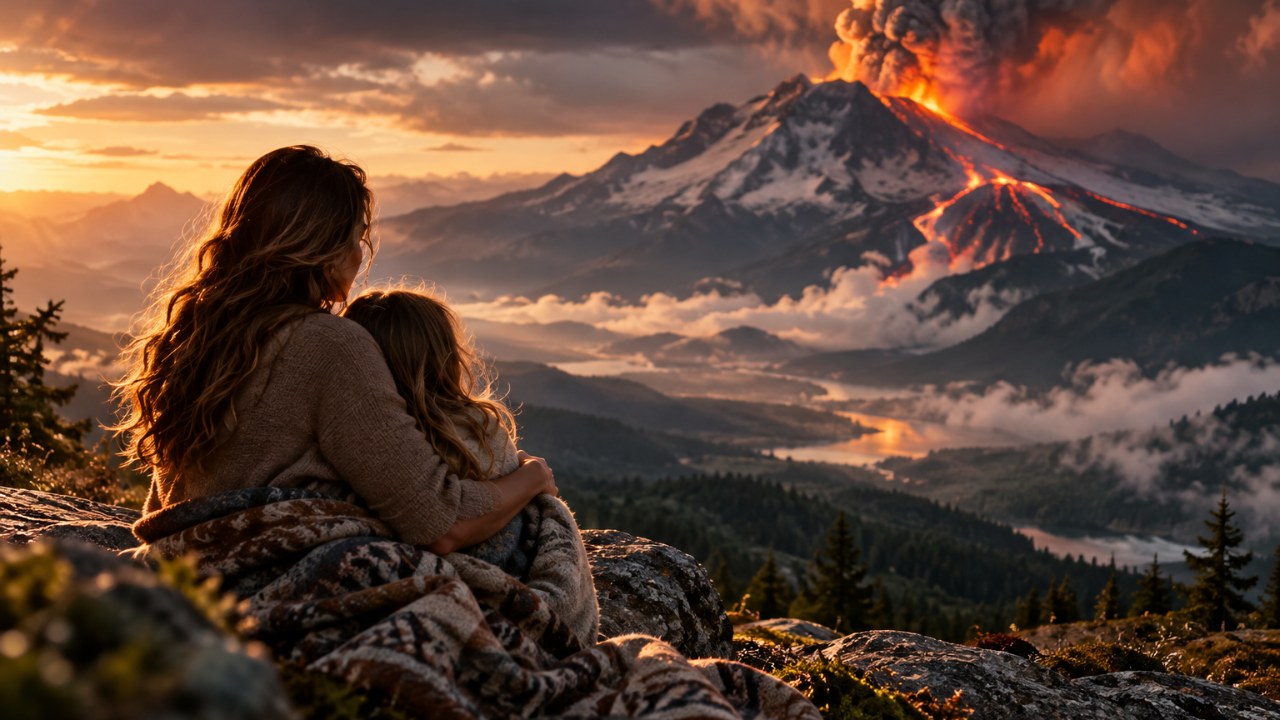
No loving partner beside me to pull me close, let me bury my face in his chest, and tell me I didn't have to hold everything together for the next five minutes.
No one to say, Come here. I've got you.
And suddenly, the medical result wasn't the only thing hurting.
It was the absence of the person I wanted to share the moment with.
The Body Remembers the Neighborhood
As a child and young adult, I had more medical appointments than I care to count.
And there were times when my mother came with me.
In fact, she accompanied me to this most recent biopsy, offering her love and support. And for that, I am grateful.
For many years, she would sit beside me, keep me distracted, and sometimes take me out afterward for coffee or something to eat.
Hell, at one point in my adulthood, she temporarily moved in with me when I was bedbound and needed a wheelchair.
I didn't have to navigate every frightening experience by myself.
Those memories came flooding back.
My parents are older now. They have their own health challenges. The roles have changed, and so have their capacities and the kind of support I need.
I understand all of that.
But understanding doesn't prevent grief.
Somewhere inside me, the little girl remembered what it felt like when somebody came along.
And the adult woman looked around her life and realized how desperately she wanted that experience again.
Not necessarily from her parents.
From a partner.
My person.
Someone who wanted to accompany me through life, not because he was obligated to, but because he loved me.
And then the shock waves started moving.
Shock Doesn't Always Arrive Screaming
In my work, I teach about shock and the ways overwhelming experiences can affect our nervous systems.
We recognize fight and flight easily enough.
But there are other responses: freezing, immobility, emotional numbing, dissociation, and the strange experience of appearing completely functional while feeling disconnected inside.
Sometimes shock looks like someone who cannot stop moving.
Sometimes it looks like someone who cannot move at all.
And sometimes it looks like the person who keeps showing up, handling responsibilities, and telling everyone they're fine while something inside them has gone quiet.
I sometimes use the metaphor of an old freezer.
With repeated experiences, layers of ice accumulate along its walls. One layer, then another, until the original surface becomes difficult to see.
That's how unresolved experiences can feel.
Layer after layer of protective responses, emotional associations, and unfinished experiences.
The ice is a metaphor for how these experiences can accumulate and influence our responses, not a literal description of what happens inside the nervous system.
Then something happens in the present.
A medical result.
A loss.
An unexpected silence.
And the body responds in ways that may seem larger than the immediate event.
The event is new. The terrain is familiar.
The body may respond to associations with earlier experiences even when the conscious mind understands that the present circumstances are different.
Sometimes the current experience is painful enough on its own.
Sometimes it touches older grief, fear, helplessness, or abandonment.
And sometimes it's both.
As those protective layers begin to soften, we may encounter feelings we've spent years learning how not to feel.
I call attention to these experiences not so people can label every emotion as trauma, but so they can begin to recognize what may be happening beneath the surface.
Because what looks like an overreaction from the outside may be a nervous system responding to far more than anyone can see.
I Know. I Know. I Fucking Know.
I've spent decades doing this work.
Professionally. Personally. Spiritually.
I've explored the unconscious, worked with my inner parts, studied altered states, and learned to recognize the difference between a present-day experience and protective responses shaped by earlier ones.
I've learned how to stay in my body.
How to notice the waves.
How to stop running from them.
I know how to regulate myself.
And this time, I did.
I cried. I rocked. I acknowledged the sadness. I allowed the feelings to move without trying to outrun them.
I didn't reach for an old distraction.
I didn't call someone simply because I couldn't tolerate being alone.
I stayed with myself.
And I was still lonely.
There was something I couldn't give myself.
Another person's arms.
The warmth of a loving partner.
The relief of knowing somebody else wanted to be there.
And I found myself asking a question I suspect many people are afraid to admit:
How many times can a human being hold themselves before they begin to ache for somebody else to do it, too?
We teach people how to regulate themselves.
How to reparent themselves.
How to become their own safe place.
How to recognize and interrupt unhealthy patterns.
And yes, all of that matters.
But somewhere along the way, healing can become another performance of independence.
As though the ultimate achievement is becoming someone who no longer needs anybody.
When did needing another human being become evidence that we haven't healed enough?
The Loneliness of Being Strong
There were years when I filled my life with work, raising my children, building businesses, and exercising.
I went to movies alone. Ate dinner alone. Traveled alone. Took myself places because I refused to stop living simply because I didn't have someone beside me.
Sometimes, when the loneliness became unbearable, I went to the gym again.
Ten o'clock at night.
Sometimes midnight.
I'd work out because I couldn't stop crying in my apartment.
And perhaps some part of me hoped I'd encounter another human being.
A conversation.
A moment of connection.
Anything.
From the outside, I probably looked disciplined, independent, and determined.
And I was.
But I was also lonely.
I learned how to build an entire life around that loneliness.
And eventually, I became so good at surviving it that people rarely saw it.
Later, I experienced something perhaps even more painful.
Being alone while lying beside someone.
A body can be inches away while emotional presence feels impossibly distant.
And that kind of loneliness has its own particular ache.
Because proximity isn't the same as connection.
And sharing a bed isn't the same as sharing a life.
Have you ever looked at someone who seems to have everything under control and wondered whether they're actually okay?
Or have you been that person?
The one who keeps functioning, keeps achieving, keeps showing up, while quietly wishing someone would notice how tired you are?
Sometimes independence is a choice.
Sometimes it's a necessity.
And sometimes it's a survival strategy we've become exceptionally good at performing.
Sometimes the Intervention Is Another Human Being
Years ago, during an especially painful moment, I found myself crying on the ground in a cemetery.
I had become so overwhelmed that I experienced profound immobility.
A stranger walking her dog stopped and asked whether I was okay and whether she could call someone for me.
Eventually, a friend came.
He got out of his car.
And he held me.
He didn't analyze me.
He didn't tell me I was too emotional.
He didn't ask me to explain why I was crying.
He simply showed up.
I've never forgotten that.
As a clinician, I know the importance of developing internal resources and learning how to recognize and respond to our own nervous-system states.
But I also know the importance of safe relationships, attuned presence, and co-regulation.
Self-regulation is our developing capacity to recognize and respond to our internal states. Co-regulation is what can happen when another person's supportive, attuned presence helps us feel safer, more connected, and better able to navigate distress.
A trusted voice.
Someone sitting beside us.
A welcome embrace.
A person who stays without trying to immediately change what we're feeling.
These experiences can matter tremendously.
And they aren't limited to romantic relationships. Friends, family members, and other trusted people can provide meaningful relational support.
But those connections don't erase the distinct desire for a loving partner.
We are not meant to have every emotional need met in isolation.
Sometimes the most meaningful thing another person can offer isn't advice, insight, or another technique.
It's their presence.
Not every experience of loneliness is a trauma response. And not every desire to be held is an unhealed wound.
Sometimes an emotionally healthy adult simply wants to be loved.
To be chosen.
To be cared for.
To know that when life becomes frightening, somebody wants to stand beside them.
After the Landing
In my previous writing, The Landing, I described what it meant to stop circling above someone else's life, trying to manage responsibilities that were never mine.
I landed the fucking helicopter.
I stopped doing the work of two people.
But landing didn't mean the shock waves stopped.
In some ways, it meant I could finally feel them without distracting myself through another person's problems.
And what surfaced wasn't another assignment to heal.
It was a desire.
A very human one.
I want a partner.
A loving, emotionally mature man who understands that relationships require participation, accountability, tenderness, and repair.
Someone who has done enough of his own work—or is genuinely willing to put in the consistent effort—to recognize that love is not simply something we say.
It's something we do. And we don't fucking run from it nor make excuses for why they ran away.
I want someone who can hold me when the waves come, just as I would hold him when his arrive.
Not a rescuer.
Not another person for me to raise.
A partner.
I don't know when or where I'll meet him.
I thought I had found him. I really fucking did!
And landing allowed me to see that the relationship I wanted and the relationship I was experiencing were not the same.
That realization brought its own shock waves.
Because there is grief in losing a relationship.
But there is another kind of grief in recognizing that you were longing for something even while you were inside it.
And that uncertainty about whether I'll ever experience the partnership I want hurts.
But I'm not going to turn my longing into another pathology that needs to be treated.
Nor am I going to mistake my ability to survive alone for evidence that I should have to.
Maybe that's what these shock waves are teaching me.
Healing doesn't mean becoming someone who needs nobody.
It means becoming someone who can recognize what she needs without abandoning herself to obtain it.
It means understanding that independence and interdependence can coexist.
And it means recognizing that the person who appears strongest may be the one quietly longing for someone to say:
Come here. I've got you.
I know how to hold myself.
I've proven that more times than I ever wanted to.
Now I want to know what it feels like to be held by someone who chooses to stay.
Regulate. Integrate. Become.
STAY CONNECTED TO SOMA ALCHEMY
Receive new Journal writings, Institute updates, upcoming offerings, and thoughtful resources exploring healing, transformation, and conscious living.
Your inbox is sacred, too. No spam. Your information will never be sold or shared.